The Science of Lens Mounts
A camera is only as good as the glass in front of it. The lens mount dictates ecosystem compatibility, optical design parameters, and long-term viability of camera investments.
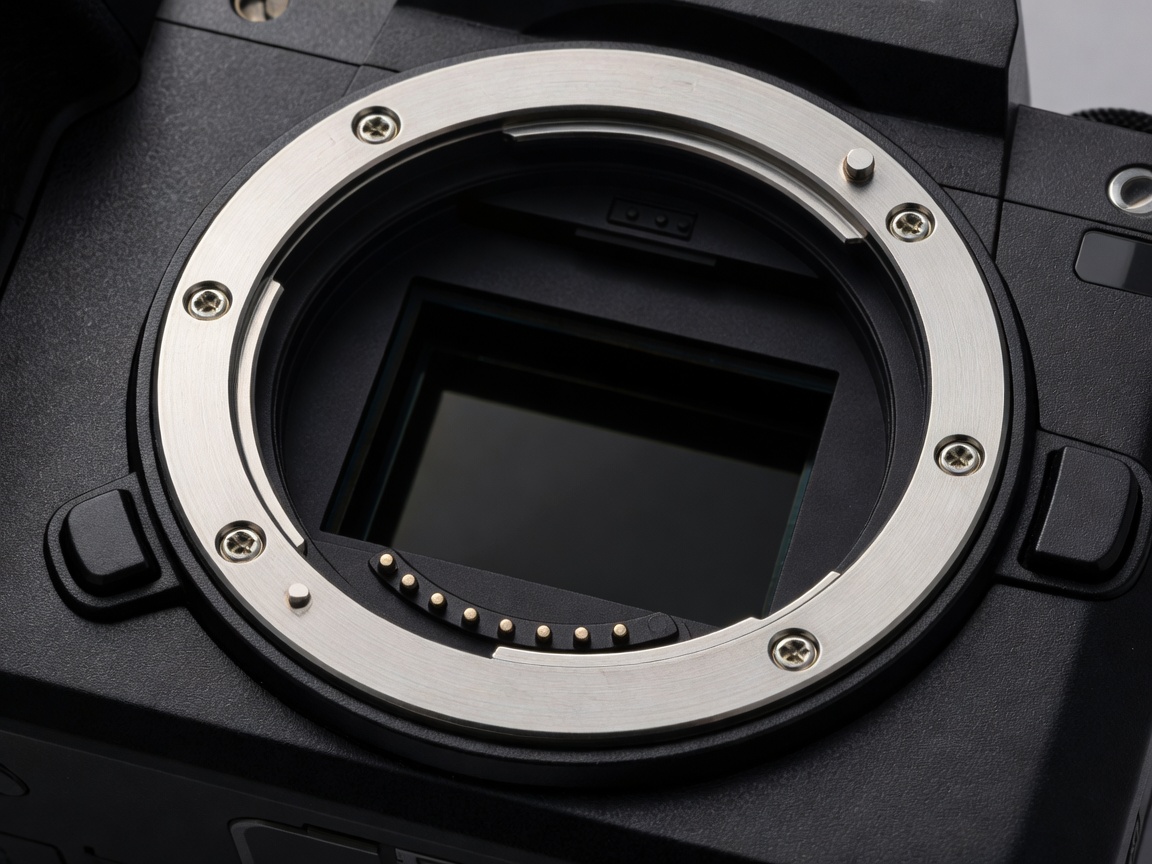
What Constitutes a Lens Mount?
The lens mount is the mechanical and electrical interface connecting a photographic lens to a camera body. Historically, mounts were purely mechanical bayonet or screw-thread systems. Today, they are sophisticated electronic bridges featuring arrays of gold contact pins. These pins facilitate complex communication: driving autofocus motors, operating electromagnetic apertures, powering optical image stabilization, and transmitting lens metadata (EXIF) back to the camera processor.
A robust mount ensures optical alignment is maintained precisely, with tolerances measured in fractions of a millimeter. Even a slight tilt or gap can ruin the focal plane and render high-resolution images soft across portions of the frame.
Flange Focal Distance
The most critical geometric specification of any mount is its flange focal distance (sometimes called register distance). This is the exact measurement from the metal mounting ring on the camera body to the surface of the image sensor.
Optical engineers design lenses to focus light precisely at this specific distance. If a lens designed for a 44mm flange distance is placed 40mm away from a sensor, it will not focus to infinity. Conversely, you can place a 44mm flange lens onto a camera with a 20mm flange distance by using a 24mm spacer ring (an adapter). This simple physics principle explains why mirrorless cameras, which have inherently short flange distances, can easily adapt older DSLR lenses.
The Era of Mirrorless Mounts
The transition from DSLRs to mirrorless cameras necessitated entirely new lens mounts. The absence of the mirror box allowed manufacturers to shrink the flange distance significantly and increase the throat diameter (the inner width of the mount opening).
A wider throat combined with a shorter flange distance allows light to strike the extreme corners of the image sensor at a more perpendicular angle. This drastically reduces optical aberrations, vignetting, and corner softness. It has enabled optical designers to create fast-aperture lenses (like f/1.2 or f/1.0 primes) that are sharp edge-to-edge even wide open—a feat that was notoriously difficult on older, restrictive DSLR mounts.
Proprietary vs. Open Standards
Camera manufacturers heavily protect their mount protocols, viewing the lens ecosystem as a primary way to lock consumers into their brand. Sony's E-mount, Canon's RF-mount, and Nikon's Z-mount all utilize proprietary electronic communication protocols.
However, the industry is seeing a shift toward collaborative standards. The L-Mount Alliance is a notable example, where Leica, Panasonic, and Sigma share a unified mount specification. This allows a user to mount a Sigma lens on a Panasonic body with full autofocus and stabilization support out of the box, fostering a rich, competitive ecosystem benefiting the consumer.
Third-Party Lens Support
For proprietary mounts, third-party manufacturers (such as Tamron or Sigma) often have to reverse-engineer the autofocus protocols, which can sometimes lead to firmware compatibility issues. More recently, manufacturers like Sony have opened their mount specifications to select third parties under licensing agreements, flooding the E-mount ecosystem with high-quality, affordable alternatives to native glass.
When investing in a camera system, evaluating the health and diversity of the lens mount ecosystem is arguably more important than analyzing the specifications of the camera body itself. Camera bodies are depreciating digital technology replaced every few years; high-quality glass built for a robust mount can last a lifetime.